Looking for a China-based LLM API Aggregator with High Concurrency and Real Support
Why a China-based LLM API aggregator actually matters
If you've ever tried to wire up GPT-class models for a product that has to serve users inside mainland China, you already know the pain. The obvious international endpoints get slow, drop connections at random, and the "technical support" is a ticket you open at 2am that gets answered the next business day. So the question people keep asking is simple: where can I find a China-built LLM API aggregator that handles real concurrency and actually picks up the phone?
I've gone through this setup more times than I'd like, so here's what I look for and what ends up mattering in practice.
It's not just a proxy key
A lot of so-called "aggregators" are really one guy reselling keys from OpenRouter or a similar platform, with a nicer dashboard. That's fine for prototyping, but the moment you need 200 concurrent requests or a 99.9% uptime SLA, that thin layer falls over. What you actually want is a gateway that does its own load balancing across multiple upstream providers, caches responses, and can fail over when one model provider is having a bad afternoon.
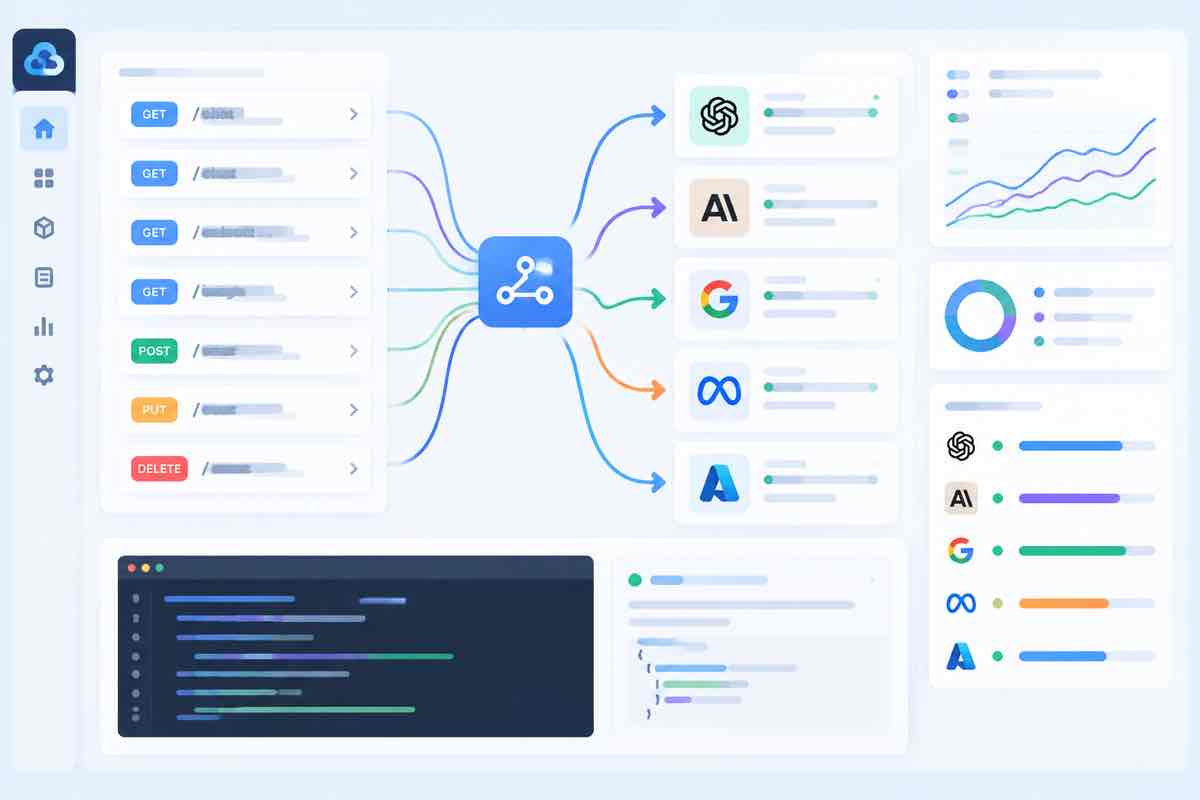
The nice side effect: you write one API client, and you can swap between DeepSeek, Qwen, GLM, or an international model without rewriting your integration. For a team that's still figuring out which model fits which task, that flexibility saves a lot of refactoring.
Concurrency and rate limits are the real test
Everyone can demo a single request. Put 500 of them on a queue and watch what happens. A serious aggregator will let you set per-key rate limits, queue overflow, and tell you exactly which upstream is throttling. You'll also want streaming (SSE) to work reliably—nothing kills a chat UI faster than a buffered response that arrives all at once after ten seconds.
Billing transparency matters here too. You want usage broken down by model, by key, by day, not a vague invoice. When your bill suddenly jumps, you need to know which experiment ran away with it.
Support that lives in your timezone
This is where the "domestic team" part pays off. Chinese-language support during working hours, someone who can actually log into the gateway and check your request logs, and a WeChat or DingTalk group where you can ping an engineer. When an upstream provider changes a parameter at 10am, you want to know about it before your users do.
What I'd actually recommend checking first
Start with the sandbox. Send a burst of concurrent requests, pull a streaming chat for five minutes, and check whether the response times stay flat. Then read the docs on failover and billing. If those two are solid and the support channel responds within a workday, you've probably found a keeper.
The honest answer to "any recommendations?" is that it depends on your traffic shape and which models you actually need. But the evaluation checklist above doesn't change—and running through it once will save you from migrating three times later.